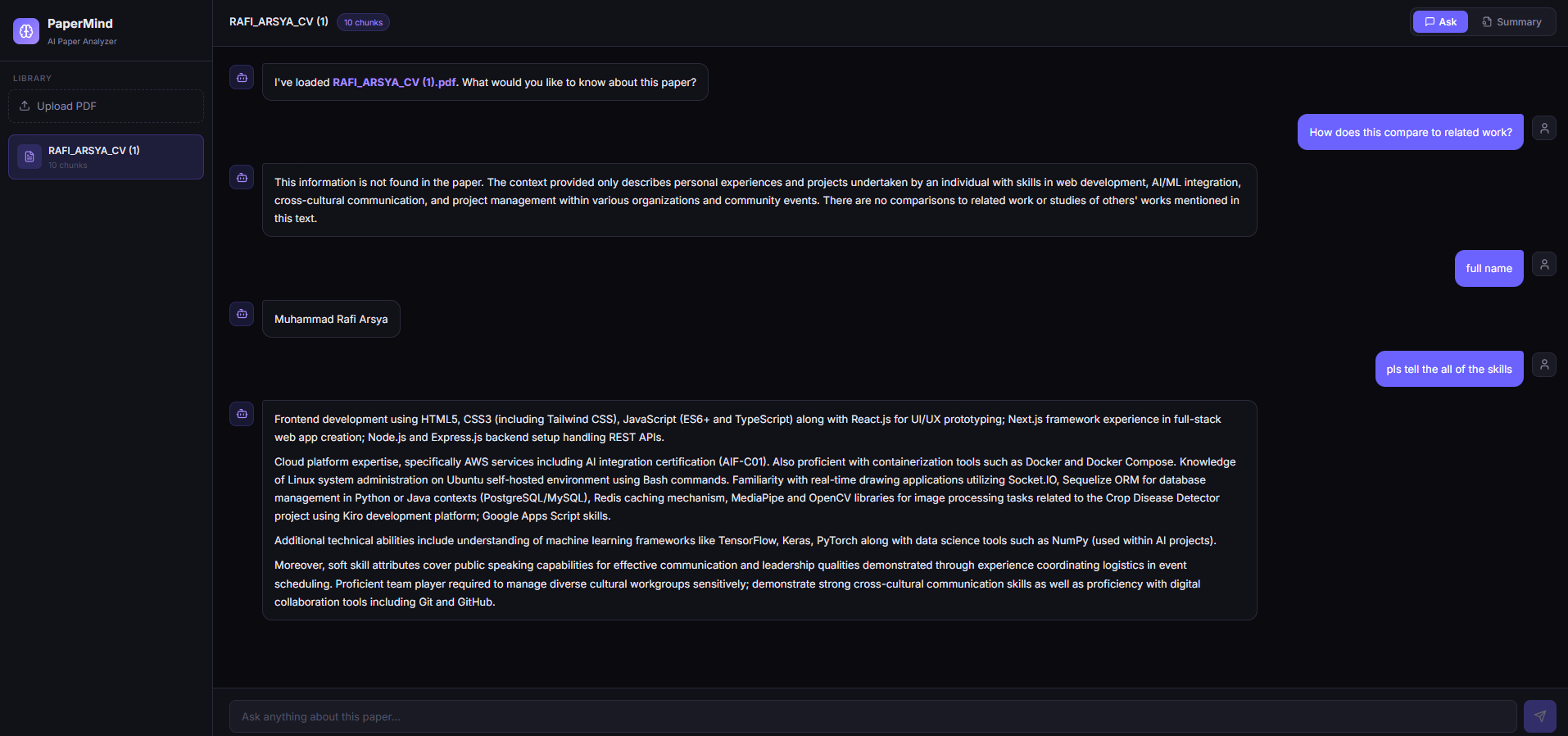
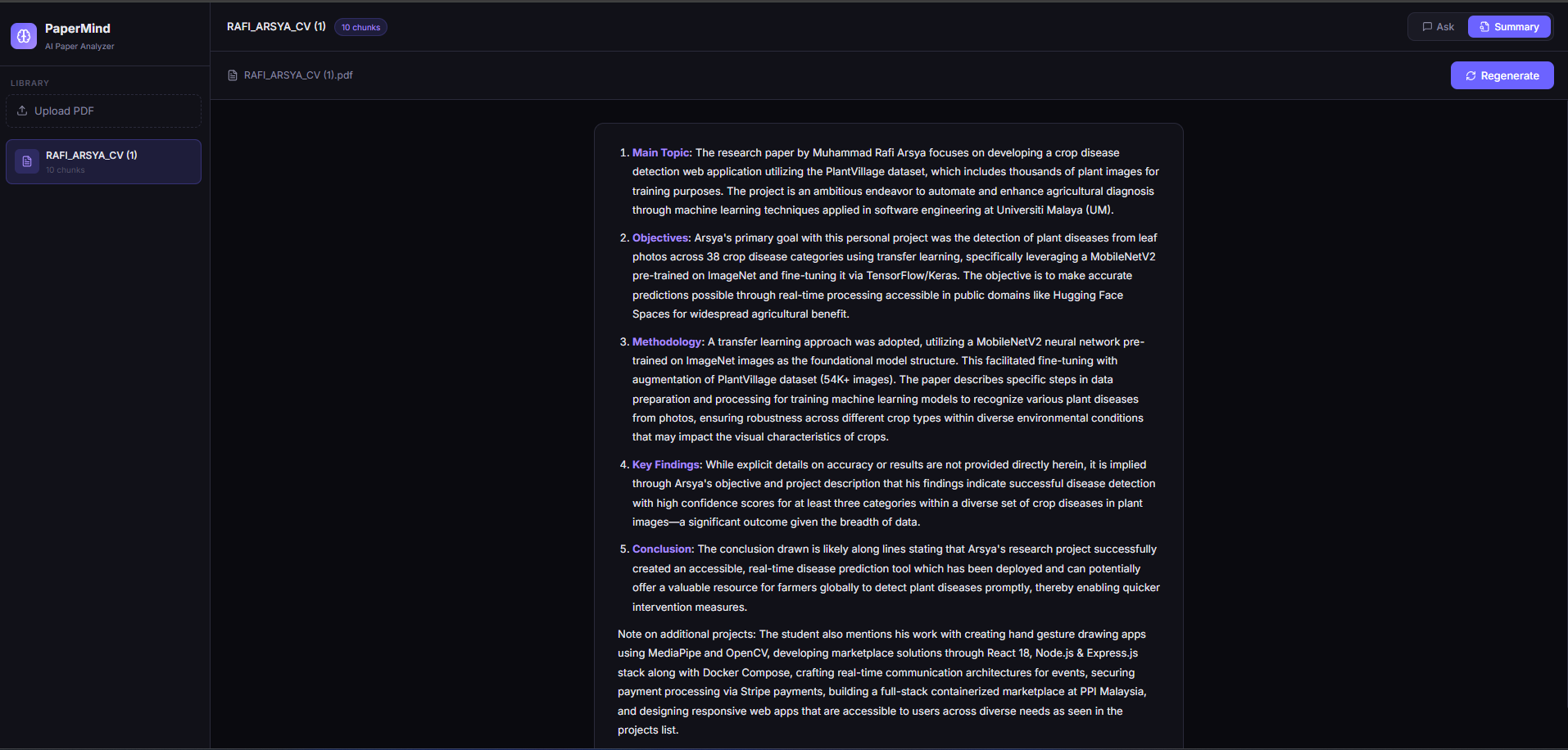
PaperMind: Local RAG Paper Analyzer
I built an AI that reads, understands, and answers questions about research papers: running entirely on my own hardware, with zero cloud dependency.
Reading research papers is genuinely hard. A single paper can run 30+ pages of dense academic language, methodology sections written for specialists, statistical findings buried in footnotes, citations that assume you've already read 40 other papers. For a first-year SE student crossing into ML, biology, or systems research? It's a wall.
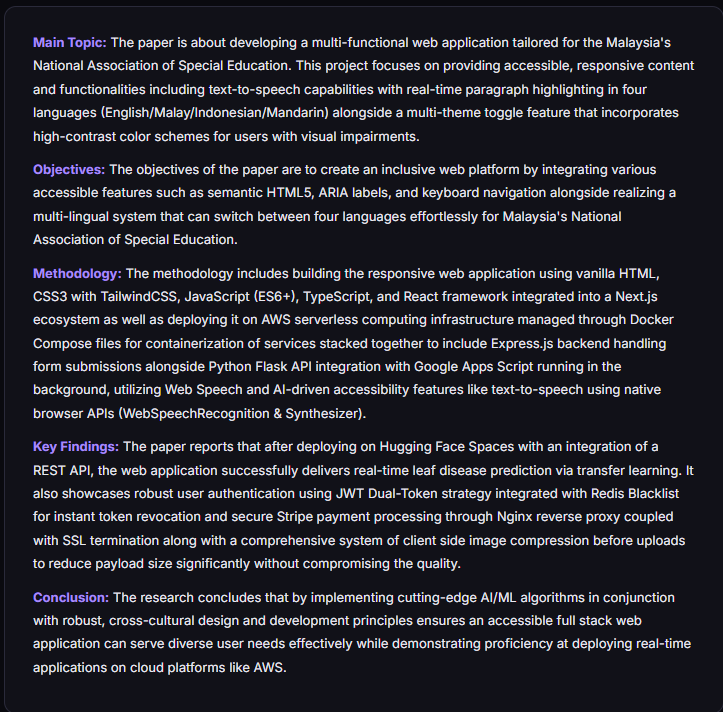
The obvious solution is to ask ChatGPT. And ChatGPT will happily answer, confidently, fluently, and sometimes completely wrong. That's the hallucination problem: a general-purpose LLM doesn't actually read your PDF. It guesses based on patterns from training data. It will invent author names, fabricate statistics, and describe methodology that doesn't exist in the paper you gave it.
That's the core problem RAG solves, and what PaperMind is built on. It's not a general-purpose AI. It's an AI that is grounded to your document: every answer is traced back to a real chunk of text from your PDF. If it's not in the paper, it won't say it.